


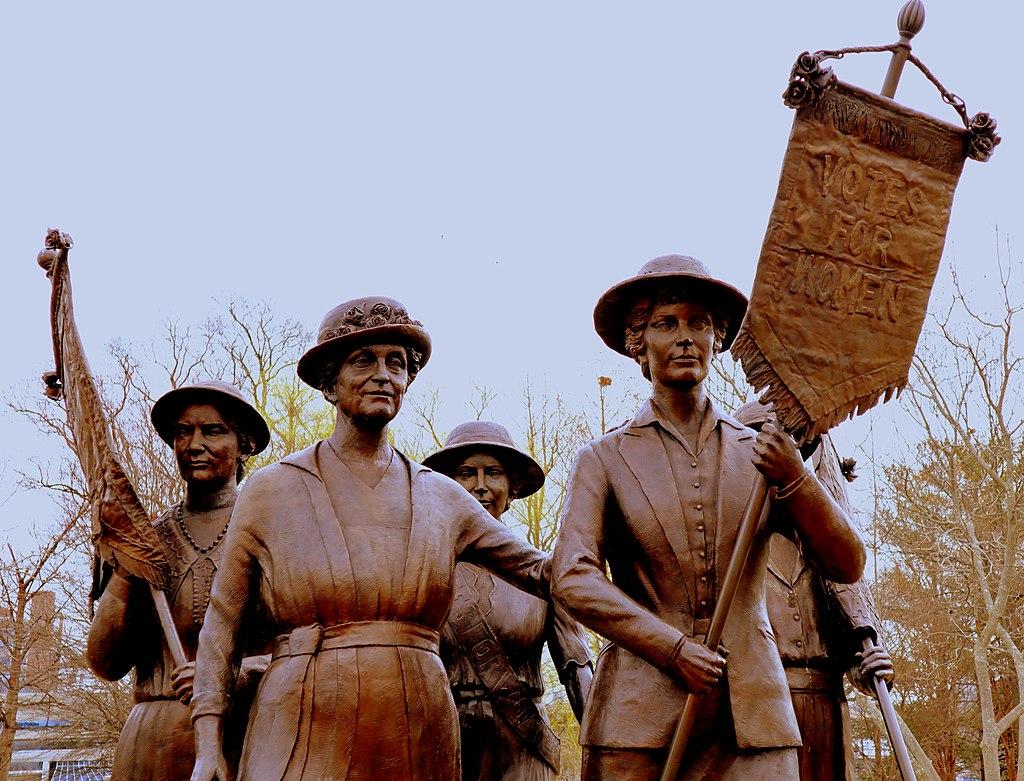
On August 18th, 1920, Tennessee cast the final vote to ratify the 19th Amendment, granting women the right to vote. The final hurdle in the Women’s Suffrage Movement happened right here in Nashville, but it took bribery, threats, cajolery, exhaustive campaigning, keen organizing, and one mother’s guilt trip to make it happen.
🌼 Nashville Takes Center Stage in Women's Suffragist Movement
While Elizabeth Cady Stanton and Susan B. Anthony became famous for their work as suffragists, by the time women finally won the right to vote in the U.S., neither was alive. Other women had taken center stage in the fight for women’s voting rights, like Carrie Chapman Catt, who helped bring the Susan B. Anthony Amendment to Congress, which would allow women the right to vote.
While the amendment was introduced to Congress repeatedly, it was only when Woodrow Wilson was president that both houses of Congress passed the amendment. But women could not vote yet: 36 states needed to ratify the amendment first.
Tennessee became that 36th state.
Catt and many suffragists in major women’s organizations had given up on the South, concentrating their efforts on other areas of the country. Tennessee women had not given up. They organized and managed to convince Tennessee Gov. Albert Roberts to call a special session to consider ratifying the amendment.
Union Station and the Hermitage Hotel became a battleground for women’s voting rights. Liquor lobbyists and factory owners descended on Nashville to convince legislators against letting women vote. Catt and suffragists across the state also gathered to persuade them otherwise.
“It was the War of the Roses,” explains Dr. Carole Bucy, local historian and Cumberland University’s first distinguished professor. “If you opposed women's suffrage, you wore a red flower on your lapel or on your dress. And if you supported women voting, you wore a yellow rose or a yellow flower.”
Women won the right to vote by only two votes. One of those votes came from East Tennessee Rep. Harry T. Burn, who originally planned to vote against ratification. A letter from his mama, Febb Burn, asking him to vote ‘aye,’ convinced him to change his vote.
When the Tennessee legislature passed the amendment, it meant enough states endorsed the 19th Amendment that it became ratified and women across the country could vote. Well, almost. The 19th Amendment primarily benefited white women. It wasn't until the Voting Rights Act of 1965 that barriers against women of color voting, particularly Black women in the South, were addressed.
💛 Where to Learn More About Our Role in Passing the 19th Amendment
- Explore the Votes for Women Room at the Nashville Public Library
- Visit the Women’s Suffrage Monument at Centennial Park
- Read “The Woman’s Hour” by Elaine Weiss
- For kids, read “The Voice That Won the Vote” and “Dare to Question”





.jpg)