
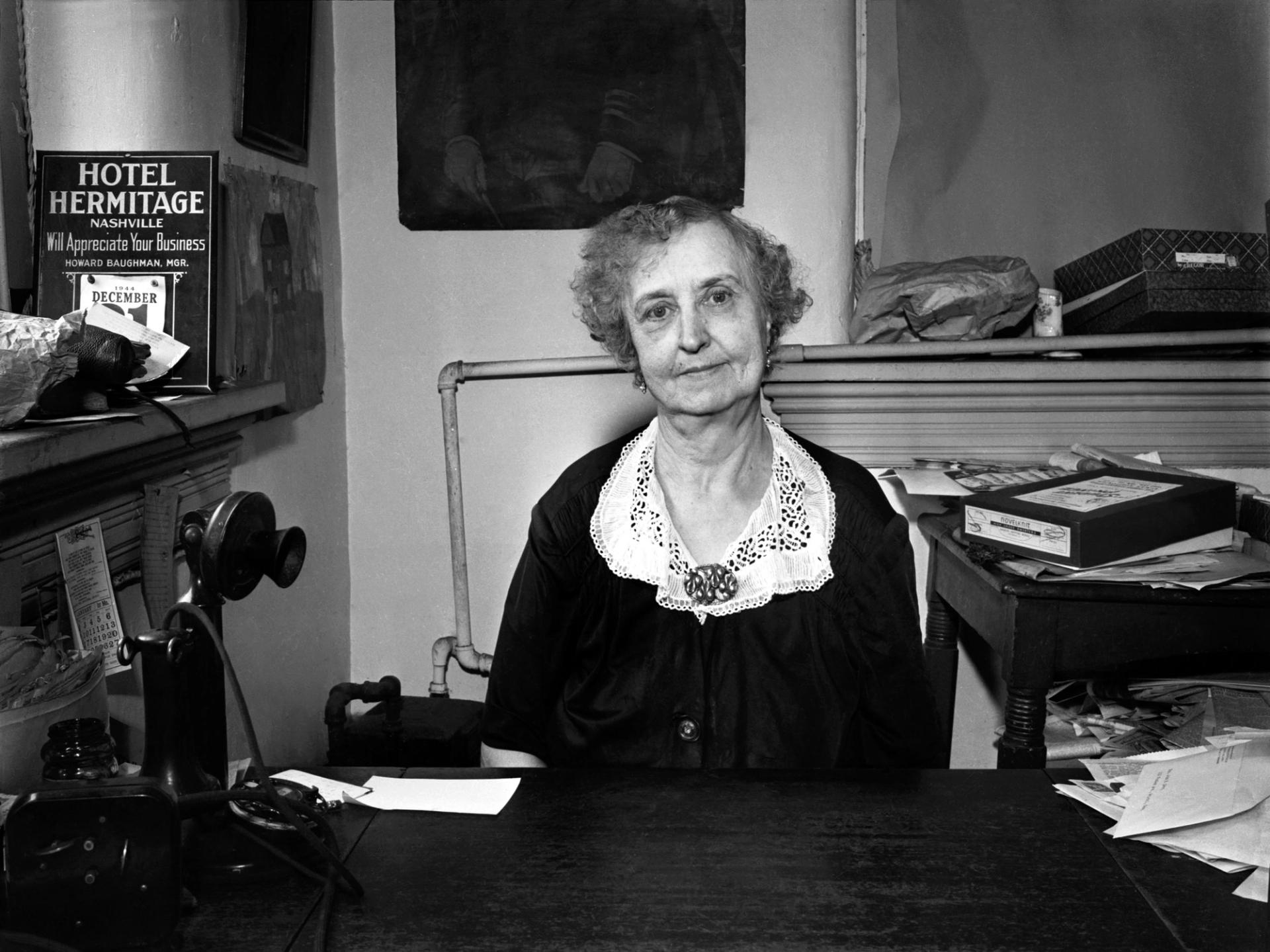
Lula C. Naff served as general manager of Ryman Auditorium from 1920 to 1955, the first woman to do so. Before she could even vote, Naff helped shape the Ryman into what it is today, and thus is integral to Music City’s history. Here’s her story.
Lula C. Naff’s Beginnings
Lula Clay was born in 1875 and raised in Johnson City, TN. She married Charles Naff at 17, but when he died a few years later, she found herself widowed with an infant daughter. She attended business school to try to find a living for her and her daughter, and worked as a stenographer and secretary for talent agency Delong Rice Lyceum Bureau. After the agency relocated to Nashville, she worked with the Ryman to book talent.
Becoming Ryman’s General Manager
The Delong Rice Lyceum Bureau dissolved in 1913, and Naff found herself without work once again. She convinced the Ryman board of directors to allow her to rent the venue for her own events. At the time, the Ryman, which opened in 1892 as a tabernacle, hosted primarily religious concerts and revivals. Naff saw its potential to be much more than that. She sought out the best talent she could find, even, as rumor has it, taking out a second mortgage on her house to pay for world-renowned Irish tenor John McCormack’s $3,000 guarantee.
When the Ryman’s charter was reorganized in 1920 as the “Auditorium Improvement Company,” the board knew exactly who to hire as its general manager: Lula C. Naff.

Ryman Auditorium. (Marie Cecile Anderson / City Cast Nashville)
Her Legacy at the Ryman
During her 35 years as the Ryman’s general manager, Naff — who went by L.C. Naff to avoid gender discrimination — booked top talents like Bob Hope, Harry Houdini, Katharine Hepburn, Ethel Barrymore, and Will Rogers. She also brought the Grand Ole Opry radio show to the Ryman in 1943. After Nashville’s Board of Censors tried to ban the play “Tobacco Road” and threatened to jail its lead actor for indecency, Lula sued them. The judge ruled in her favor and the play was successful, though it was banned in other cities.
Despite being one of the few women in the business, Naff was just as likely to book anti-suffrage events as she was pro-suffrage — whatever made the Ryman the most money. When she took over as general manager, the Ryman was in debt, but she managed to pay it all off after three years. However, she was far underpaid compared to male colleagues, which she frequently complained about in letters.
She was known in the industry as being “a bit difficult,” and her attitude rubbed some people the wrong way. Yet her keen sense of what would work at the Ryman helped it become what it is today. According to Joshua Bronnenberg, museum curator and tours manager of Ryman Auditorium, “The Ryman was her whole world. She worked long hours, didn’t take vacations, and didn’t spend money needlessly. She would go above and beyond to ensure things went as well as possible.”
Lula C. Naff’s Later Years
Naff was named manager emeritus when she retired in 1955 at 80. She died five years later. In 2017, Naff was inducted into the Music City Walk of Fame.
Learn more about Lula and her history at one of the Ryman’s daytime tours.