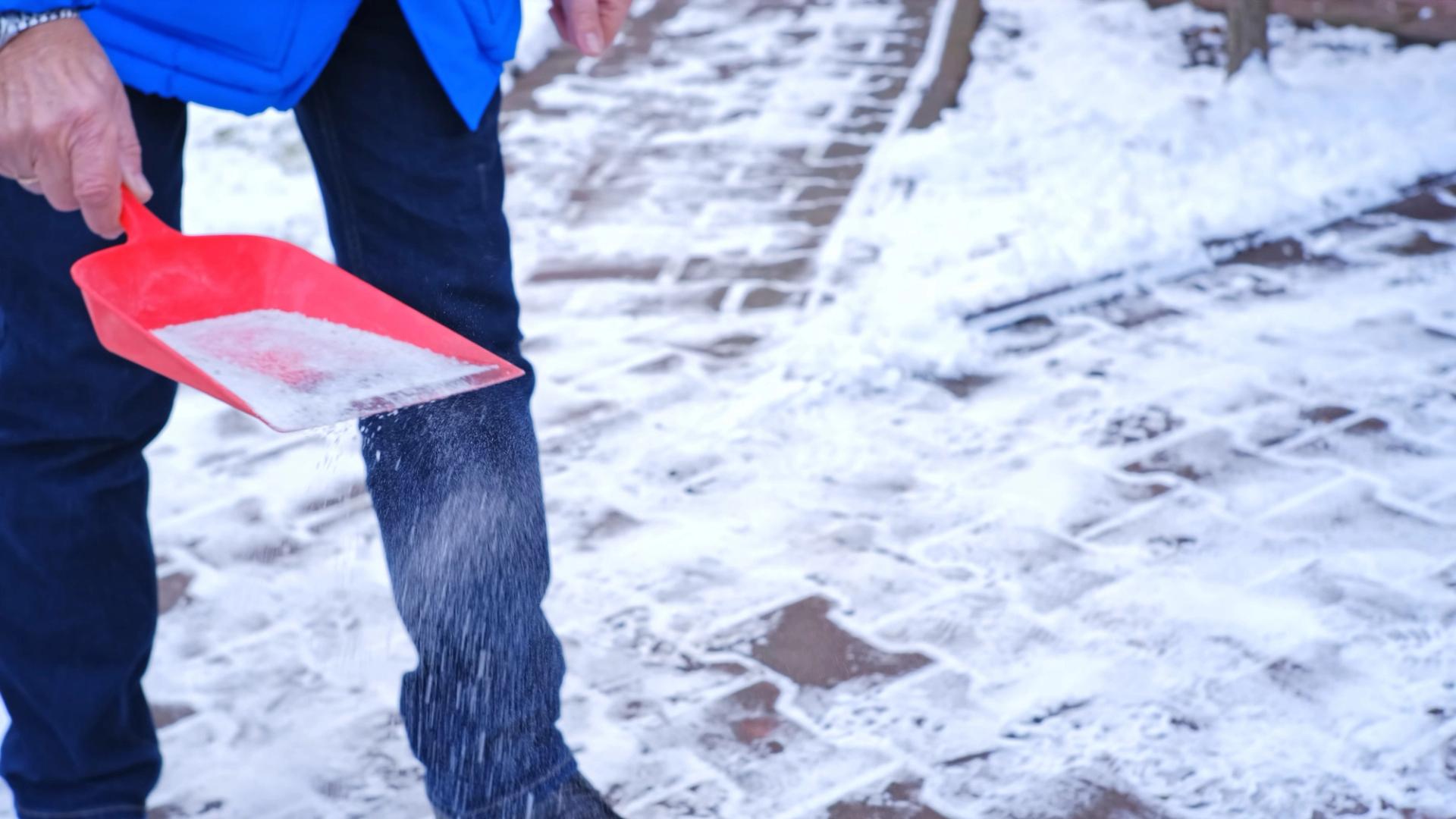
Nashville’s snow season (such as it is) has arrived, and it can be tempting to throw down that rock salt to keep your driveway and steps clear. While effective, those chemicals damage the environment and our communities long after the storms have passed.
The Issue With Deicing
The most common deicer, rock salt, does the job quickly, but eventually washes into nearby waterways, where it is toxic to bugs and wildlife. It can also accumulate on roadsides and in yards, where it kills plants and causes soil erosion.
Even worse, rock salt moves through the ground into drinking water wells. This “freshwater salinization syndrome” particularly affects people who are sensitive to sodium and chloride, but it can cause high blood pressure and kidney problems in anyone.
Salt also degrades buildings, bridges, and pipes, costing homeowners and the city hefty maintenance and repairs fees.
The U.S. uses 20 million metric tons of salt on roadways each year. This is enough to fill dump trucks bumper to bumper for 8,333 miles! The Tennessee Department of Transportation has 281 salt trucks for the Middle TN region, with 67,370 tons of salt on standby. While the small bag of salt you use on your driveway may seem insignificant, it can make a big difference in high-density areas.
How to Deice Responsibly
- Instead of rock salt, which has cyanide in it, use magnesium chloride or calcium magnesium acetate. While more expensive than rock salt, you need to use less of it, and it has minimal chloride, which protects the environment.
- Remove as much snow and ice as possible before applying a deicer. I know, shoveling sucks, but do it for the fishies.
- Use deicer sparingly. Only a handful of salt per square yard is needed.
- Sweep up extra salt to reuse.
- Store extra salt in a waterproof container to prevent leaks.
Chemical-Free Solutions
- Make a DIY deicer. You can use everything from pickle juice to warm water with table salt. Put your concoction in a spray bottle and distribute it on icy areas.
- Use sand to improve traction.
- Cover small areas (such as your steps) with heavy, waterproof plastic or a tarp before bad weather.