Nashville is a weird, wonderful, frustrating, promising, mostly delightful place to live, which explains why we're bursting at the seams. But the first thing many newcomers learn is that we aren’t afraid to let you know when you’re saying something wrong. (Bless your heart.) When you’re fixin’ to say something out loud, do a little research first — the names you read are often not as they appear.
🤓 It’s Pronounced “Duh-MUM-bree-in”
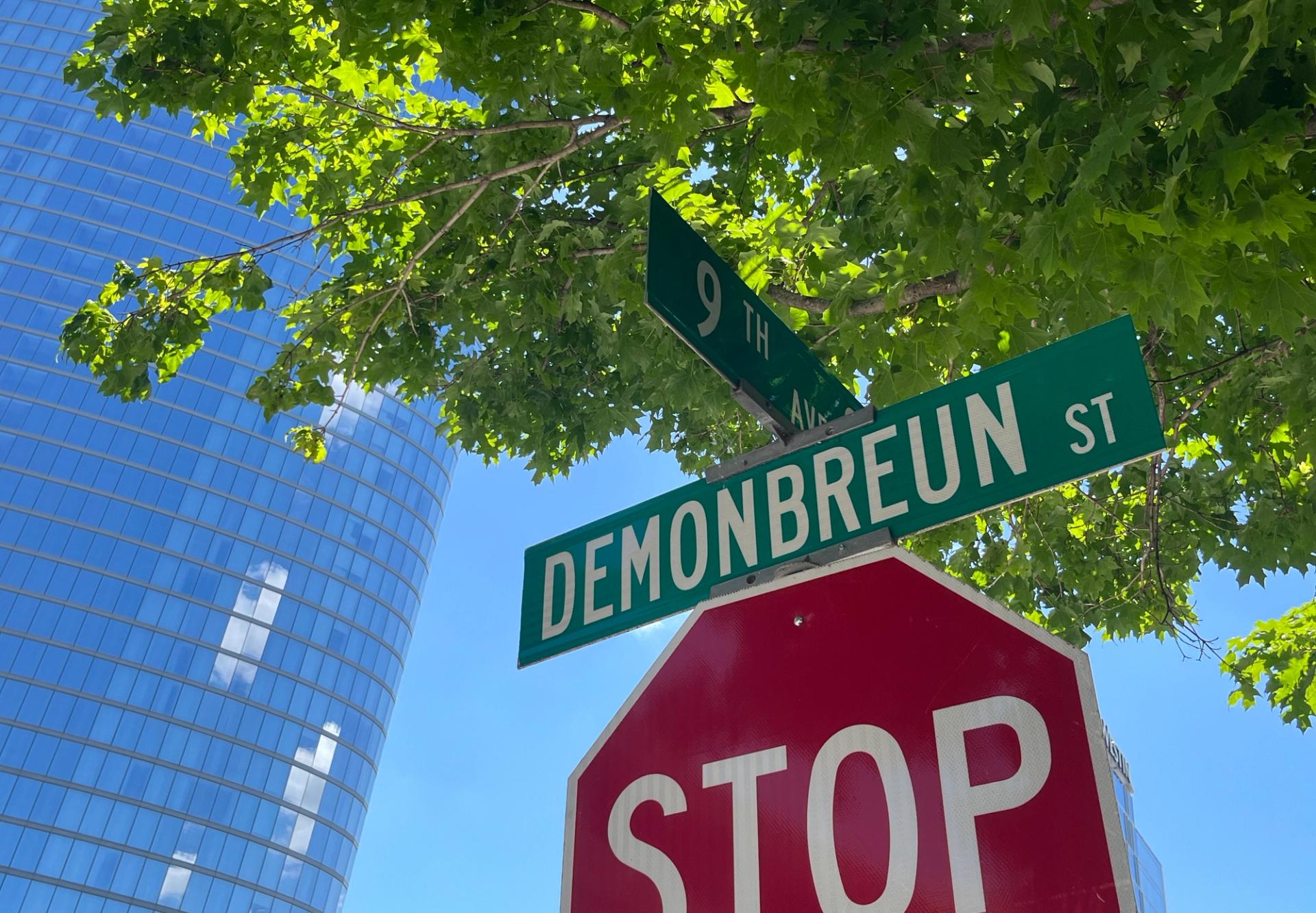
One of our biggest downtown streets is named Demonbreun. Looks easy enough, but wait! It is not pronounced “Demon-brooin” — you might be thinking of our bike lane sweeper. A few more traps to avoid:
- Lebanon = LEB-nun
- Lafayette = Luh-FAYette
- Any place ending in “ville” = if you can pull it off with authenticity, you want to swallow that postfix a bit. For example, instead of “Shelby-ville,” try “Shelby-vull.”
▶️For more, follow Mossy McFly aka @mossy615 on Instagram and check out his highly educational "Say It Like You're From Nashville" series.
🤔 Okay, But Why Do You Say Things Weird?
As Mossy McFly explains, Nashville’s European settlers had a hand in what we call various streets and neighborhoods. “There were places given French or French-Canadian names that were anglicized shortly after English speakers arrived,” he says. “Many of those are now pronounced differently depending on specific Nashville dialects:
- Demonbreun: This name was originally spelled De Montbrun, before it was anglicized to no longer resemble its French roots.
- Bordeaux: The emphasis on the second syllable was dropped among most Nashvillians, and is now akin to the word 'photo.'
- Lafayette: Emphasis was moved to the second syllable, and the long ā is present for a few reasons: The U.S. Southern dialect, which came from lower-class Englishmen; and emulating the name of Fayetteville, NC, which Tennessee was a part of before becoming its own state.”
“Education and intelligence are not mutually exclusive,” Mossy stresses. “Nashville has the nickname ‘Athens of the South’ due to its high concentration of colleges and universities, yet education costs money. We also have people who came here to pursue music — and the cultures of blues, country, honky-tonk, and bluegrass all have a connotation of simple living. All this to say, education may say to pronounce things ‘correctly,’ but intelligence is the ability to ‘accurately’ communicate with others.”