
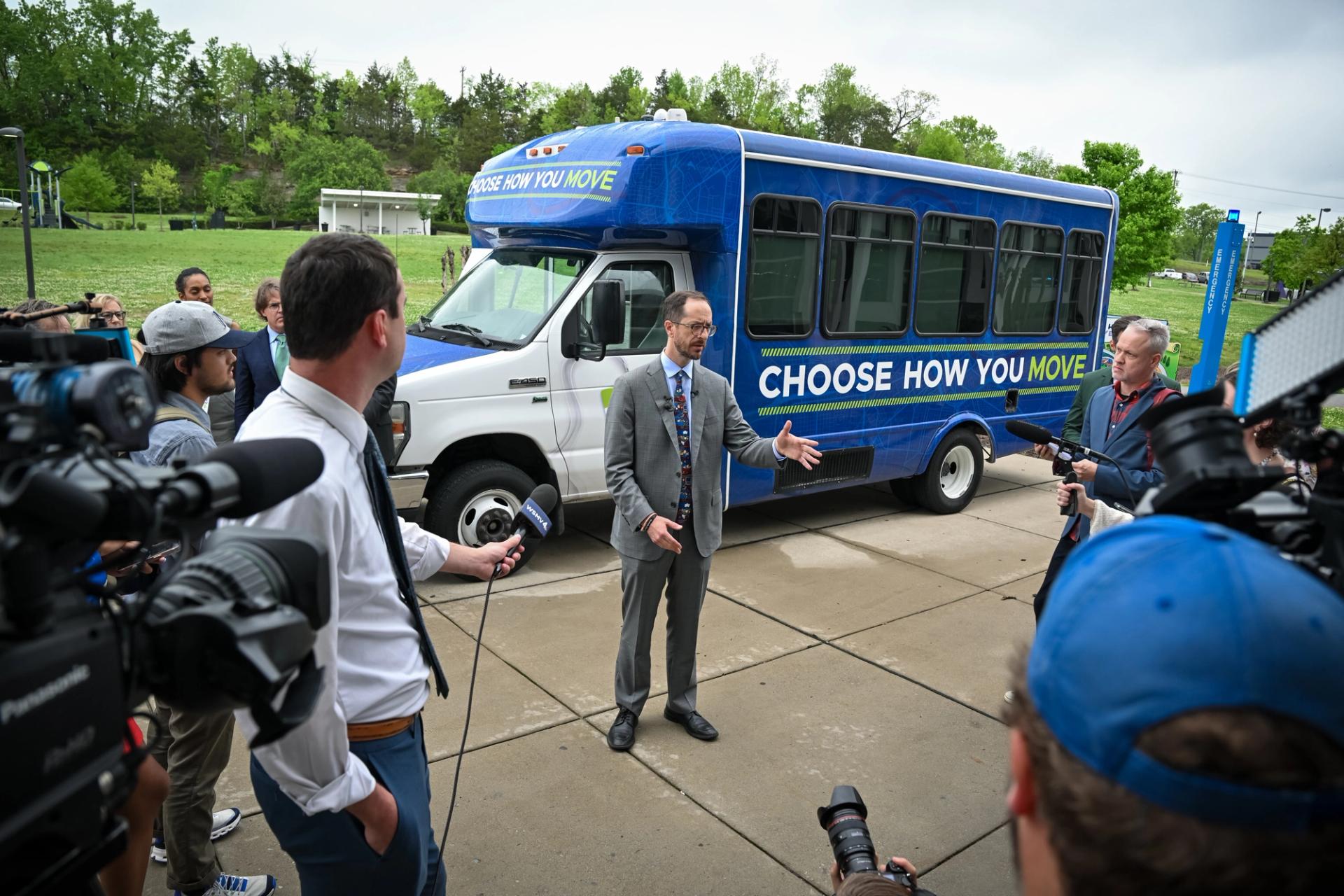
On the Nov. 5 ballot, Davidson County voters will decide whether or not to approve Mayor Freddie O’Connell’sChoose How You Move (CHYM) transit referendum plan, which would add more sidewalks, bus routes, and bike lanes, and improve traffic signals. Below, I’ve outlined what is included in the transit referendum, how it compares to 2018’s transit improvement plan, and the arguments for and against it. Early voting begins Oct. 16 and runs through Oct. 31.
Choose How You Move Details
This interactive map shows what transportation improvements would be made in your neighborhood. Use the plus button on the bottom right to zoom in, and you can enter your address by clicking on the magnifying glass in the upper left.
Here are some countywide details about the referendum’s planned improvements:
- 86 additional miles of sidewalks
- Updates to nearly 600 traffic signals
- 54 miles of all-access corridors, which includes dedicated transit lanes, 2x more frequent bus service, and more crosstown and connector routes
- Expanded transit hours of operations
- 12 new transit centers
- 17 new park-and-ride facilities
- 33 miles of safety improvements, which include new bikeways and improved lighting
- Fully subsidized transit trips for low-income residents
- Expands WeGo Link countywide to connect rural areas of Davidson County with bus rides
2024’s vs. 2018’s Transit Referendums
This isn’t the first time Nashville voters have cast ballots on a transit improvement plan. In 2018, former Mayor Megan Barry’s transit referendum plan, Let’s Move Nashville, was on the ballot, and 64% of Nashvillians voted against it. However, the two transit referendums are very different.
- Barry’s plan focused on 24 miles of light rail lines and a 1.8-mile tunnel underneath downtown. O’Connell’s focuses on improving bus routes and sidewalks.
- Barry’s plan centered the downtown and touristy areas, while O’Connell’s connects neighborhoods and makes neighborhood improvements.
- Barry’s plan’s projected cost was $5.4 billion, while O’Connell’s is $3.1 billion over 15 years.
What Proponents Say About Choose How You Move
- Nashville has the worst commute in the nation. More reliable public transportation would mean fewer cars on the road.
- 1,700 pedestrians have been killed across the state since 2010, including 209 in 2022 and 188 in 2023. More sidewalks, crosswalks, and better traffic signals could lower the number of pedestrian deaths.
- The additional park-and-ride facilities would help out-of-county commuters.
- MNPS high school students and out-of-zone middle school students receive free WeGo bus passes, and the plan would provide easier access to bus routes to and from school.
- Nashville is one of the few cities of its size without rapid mass transit.
- By passing CHYM, Nashville has the potential to unlock an additional $1.4 billion in state and federal funding across the life of the program.
What Opponents Say About Choose How You Move
- The transit referendum would increase the sales tax by half a penny to pay for the transportation improvements. Opponents say it’s a regressive tax that would hit low-income residents hardest. The estimated cost per household is $70 a year.
- Some have safety concerns about the possible increase in unhoused folks using transit centers.
- There are also arguments that bike lanes are ugly.