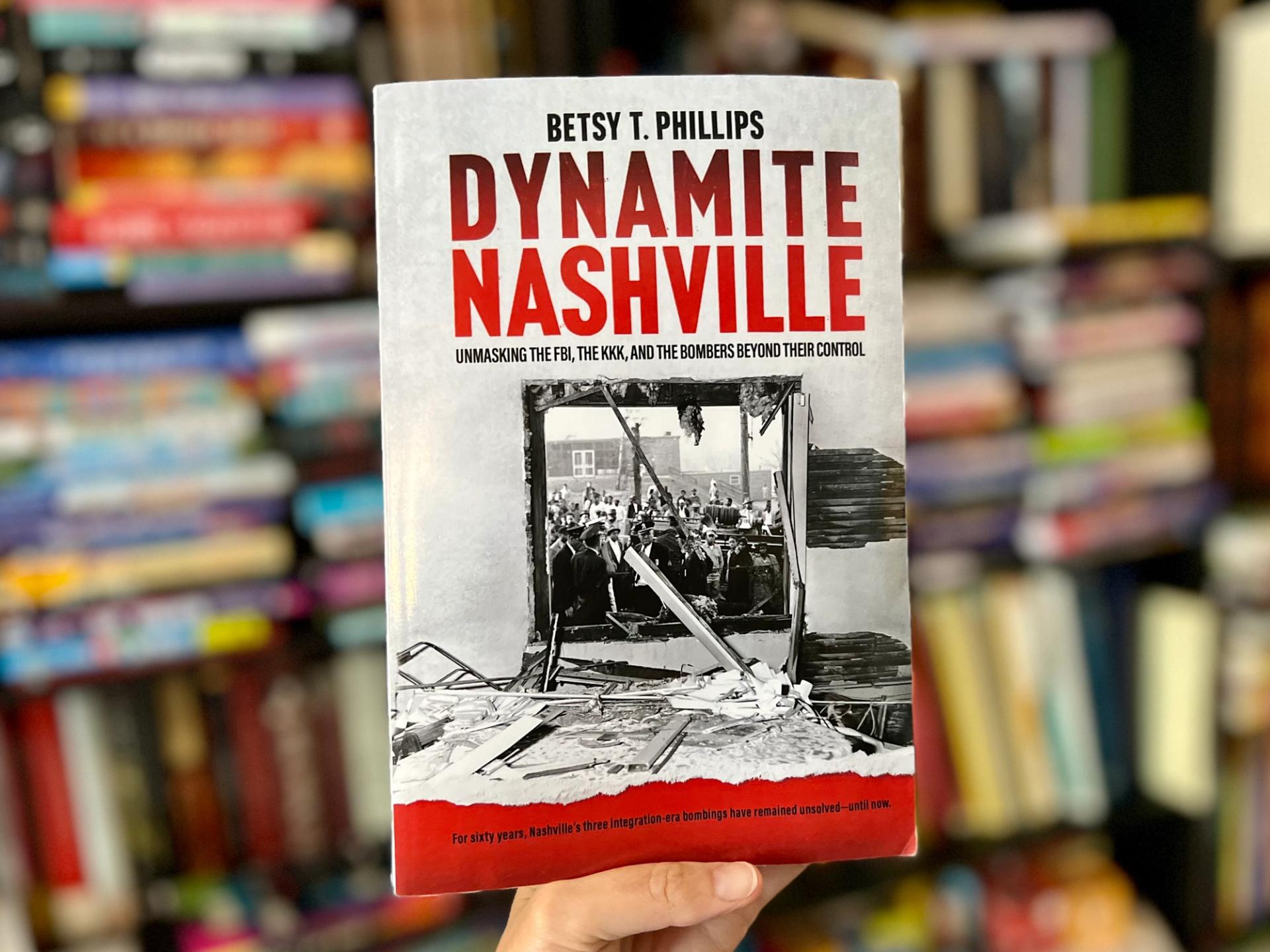
It’s been an odd, sometimes nauseating experience reading Betsy T. Phillips' new book, “Dynamite Nashville,” while watching news stories about neo-Nazis protesting around town: Shouting at Metro Council members, harassing folk outside the West End Synagogue, yelling racist epitaphs in Downtown. It’s not unlike some of the descriptions of KKK and anti-school desegregation protests described in Phillips’ book.
This isn’t to say the book itself is nauseating; far from it! It’s an insightful and compassionate grappling with three unsolved integration-era bombings, and how Nashville’s history from this time (the 1950s) has influenced who we are as a city today, which, oh boy, sure does feel extremely relevant right now.
Phillips started this book with the intent of solving three race-related bombings: The Hattie Cotton Elementary School bombing on September 10, 1957, the Nashville Jewish Community Center bombing on March 16, 1958, and when city councilman Z. Alexander Looby’s home was bombed on March 3, 1960. It’s not quite a spoiler to say she does not solve these cases. Instead, she uncovers a dark web of violent racists working throughout the south, targeting Nashville to undermine integration, sometimes even with the FBI’s help.
So much of what Phillips discusses in the book has direct implications for how Nashville works today. And while she was unable to solve these bombings in her research for the book, her work inspired Mayor Freddie O’Connell to reopen the cases and assign an investigator to them. Many of the people involved could very well be alive today. These cases will now receive the respect and diligence they should’ve been given in the first place.
As Phillips says, “A city can’t heal if it can’t say what happened.”