

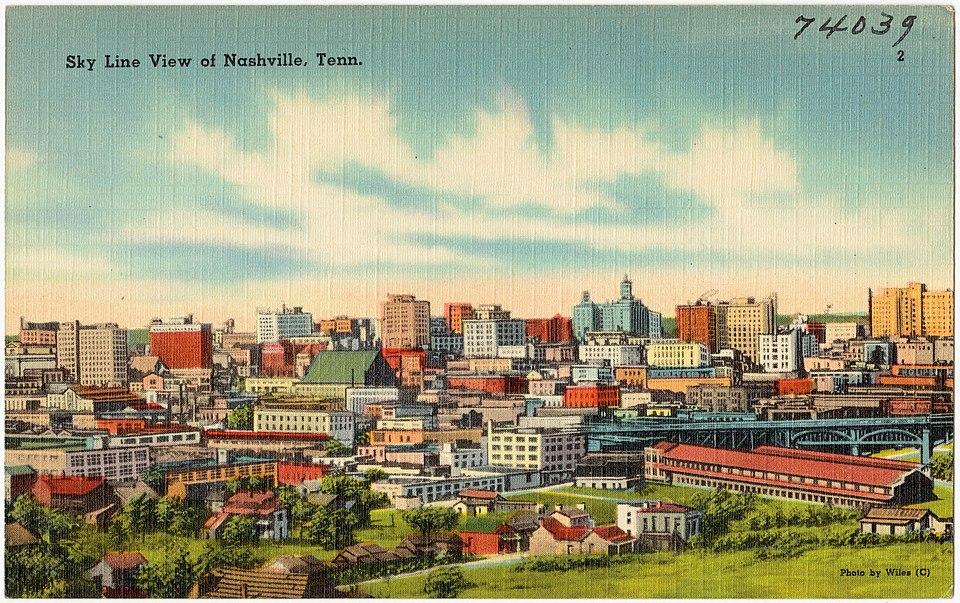
Nashville can whine a lot about transplants: They raise the cost of housing, can’t drive, don’t vote the way we want them to. I get it; I’ve definitely been guilty of transplant bashing. But also, most of us probably aren’t truly native Nashvillians. My Nashville family history starts in 1943, when my grandmother moved here from rural Tennessee. My grandfather followed from Colorado in 1948. What was life like in Nashville for transplants like my grandparents? Here’s the story of 1940s Nashville from their perspective.
Moving to the Big City
My grandmother grew up on a small farm in McMinnville, TN. Before she was born, the Spanish flu pandemic of 1918 swept through her family, with devastating results. Her mother, my great grandmother, lost her husband and two children. A nearby farmer helped as she grieved, and that farmer eventually married my great grandmother. My grandmother, Eunice Louise “Jackie” Masters, was born of that union on June 30, 1926.
A good student, my grandmother won a scholarship to Nashville Business College, and escaped small-town life for the big city after she graduated high school in 1943. Nashville Business College, now no more, is best known for its record-breaking women’s basketball team from 1950-1969, with 11 Amateur Athletic Union national championships. My grandmother, alas, was no basketball player (my family does not excel at sports), and that was after her time anyway. Instead, she studied secretarial skills and, 8-9 months later, landed a job with the state of Tennessee as a secretary in the Division of Hotel and Restaurant Inspection. She dropped out of college, and never graduated.
Nashville in the 1940s
In 1943, the U.S. was at war, and my grandmother kept up a lively correspondence with a handsome soldier overseas. Eventually the two decided to call it quits, but she kept those love letters to taunt my grandfather with for her entire life.
During WWII, military exercises were held at the Warner Parks, we had army day parades downtown, and more than 300,000 Tennesseans served.
As men left to fight in WWII, women took their places at work. By the time the war ended in 1945, women made up 37% of the workplace. Many of those jobs were ‘pink collar,’ work overwhelmingly held by women, like my grandmother’s secretarial position.
When my grandmother started working for the state, Democrat Prentice Cooper was governor. As governor, Cooper oversaw the building of an aircraft plant in Nashville to aid in WWII efforts. He also enacted the state’s first civil service act, which provided a merit-based way for state employees like my grandmother to advance and earn raises, and increased education funding by 66%.
Soon after my grandmother began working for the state, Jim Nance McCord, also a Democrat, became governor. McCord is best known for his sweeping education reforms, setting aside significant funds to increase teacher pay and better fund higher education to take advantage of the GI Bill, and returning soldiers seeking college educations. However, he became unpopular when he enacted a sales tax to pay for these education reforms, and was voted out after two terms.
My grandmother met and worked with McCord several times on events and always spoke fondly of him.
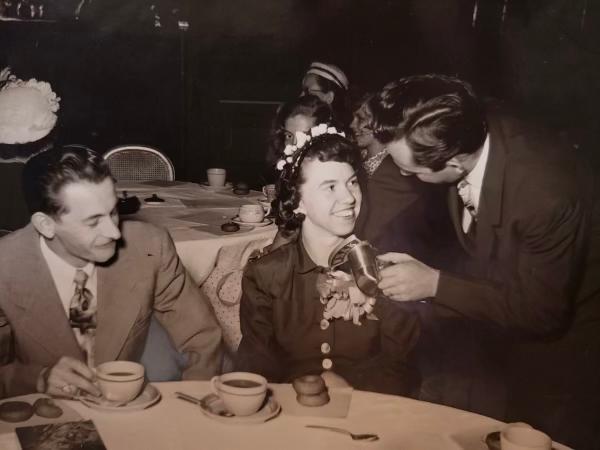
My grandparents at Maxwell House Hotel. (Courtesy of Jan Kingsbury)
While neither of my grandparents was involved in Nashville’s music scene, in the 1940s, we were cementing ourselves as the country music capitol, thanks in large part to the Grand Ole Opry radio show, though my grandmother’s favorite radio program was Your Hit Parade.
Landmarks included Union Station (check out that street parking!), the Parthenon, and Maxwell House Hotel, where my grandmother sometimes helped organize events. Famous Maxwell House visitors included Pres. Theodore Roosevelt, Thomas Edison, Henry Ford, and “Buffalo Bill” Cody. Maxwell House burned down on Christmas Day in 1961.
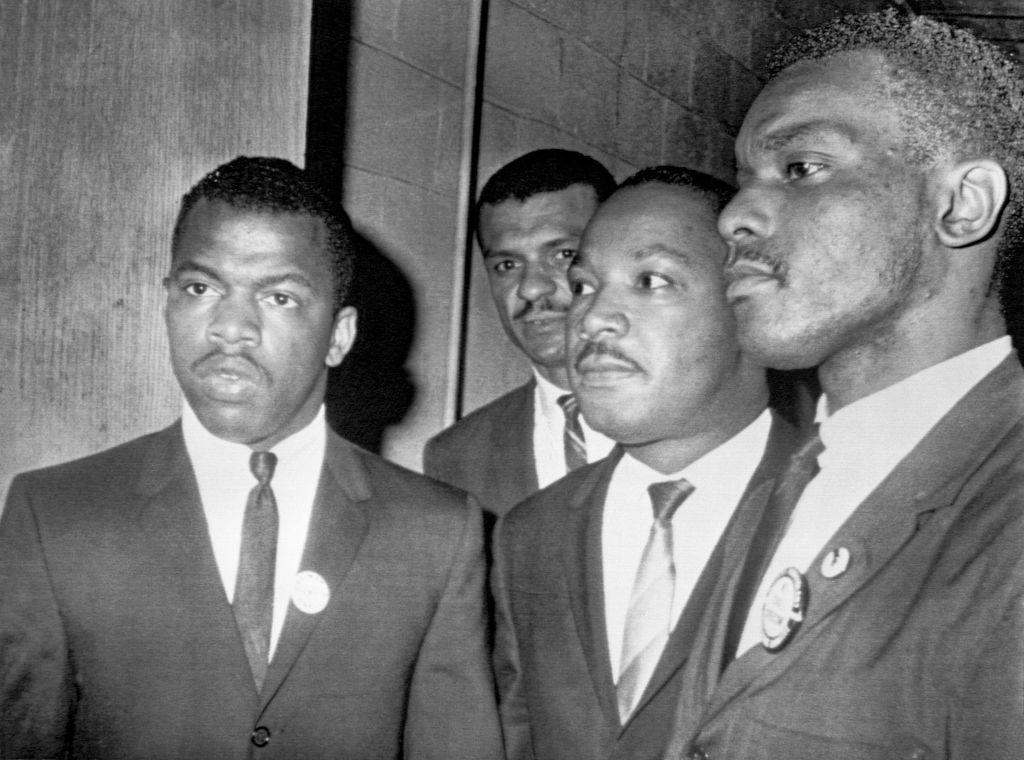
Nashville was heavily segregated in the 1940s, and Black communities developed in East and North Nashville, with Jefferson Street becoming a hotspot of jazz and blues music. We were still more than a decade away from school desegregation and the lunch counter sit-ins. I wish I could say my grandparents were outraged by the time’s racism and Jim Crow Laws, but I doubt they paid it much thought. Like many white people, they were complacent with how things were, and did not fight for the rights of their neighbors.
Escaping Colorado
My grandfather, William “Bill” Weaver, lived on a ranch in Moffat, CO, at the foot of the Sangre de Cristo Mountains. While not as vociferous a storyteller as my grandmother, I have the impression that his childhood was hard at times, and he was eager to leave. A couple of years younger than my grandmother, he never served in WWII (though he would later serve in the Korean War), and he came to Nashville in 1948 to work for his brother Jim fixing typewriters.
My grandfather rented a house on Linden Avenue with his friend Sam, and my grandmother rented a West End Avenue apartment with her friend Marie. At the time, rent in Tennessee cost about $15 a month, or $345.11 adjusted for inflation. It was likely higher in Nashville compared to the rest of the state. Currently, rent averages $1,800 a month in Nashville. Phew! Like many young people in Nashville (or the not-so-young), the two had roommates to help make ends meet.
When Sam and Marie began dating, they encouraged their roommates — my grandparents — to go on a double date with them. My grandparents had never met until then. On Thanksgiving Day, 1949, the four went on a double date to the Clinic Bowl, then to Columbia for dinner. The Clinic Bowl was a high school football game to raise money for charities. While this article says there was no Clinic Bowl in 1949, I’m not gonna question my grandparents’ memories of their first date.
The two immediately hit it off, enjoying each other’s jokes and stories. Their dates consisted of riding around Nashville in the car, sometimes stopping by parks, going to the movies, and double dating with Sam and Marie. At the time, movie tickets were about a quarter. The top-grossing film in 1949 was “Samson and Delilah,” which looks frankly hilarious. My grandmother always complained about how violent movies are today, but this looks pretty darn violent!
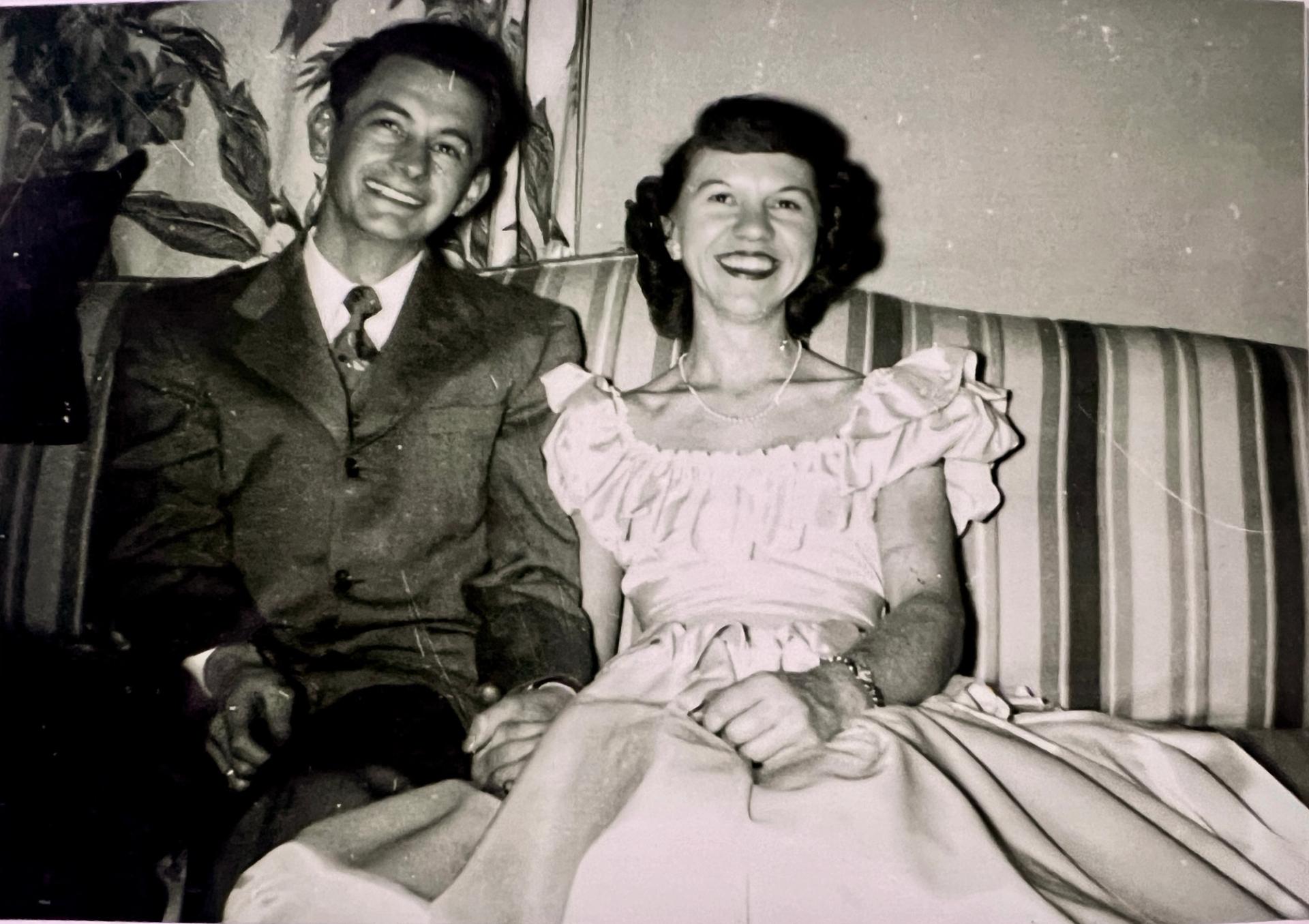
And they lived happily ever after. (Photo courtesy of Louise Weaver)
My grandfather proposed in March of 1950, and about six months after their first date, they married. The ceremony was in Whites Creek, in the home where my grandmother’s parents now lived.
They initially rented a West Nashville apartment together, then moved in with my grandmother’s dad in Whites Creek after her mother passed away. They would buy their first and only home in 1955, in Madison, but the 1950s are a story for another day.
My grandparents passed away in 2021 and 2024, but my grandmother filled out a memories scrapbook for me one year as a present, where I gleaned much of this history about her early days in Nashville. I’m so glad she took the time to do that. Ask your elders for their stories, folks, before it’s too late!







.jpg)